
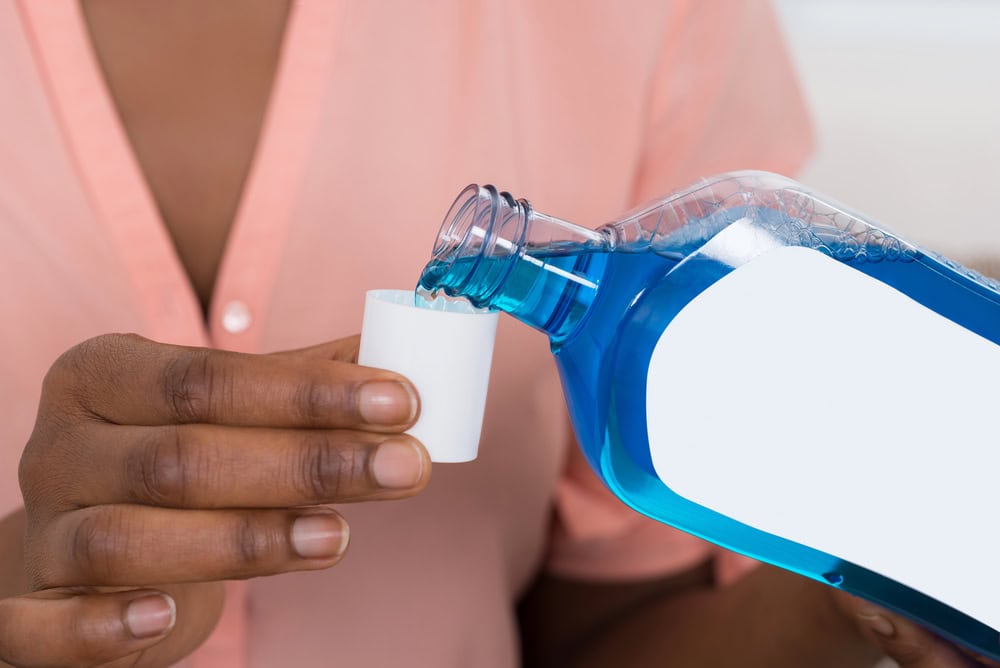
All those big bottles of green and blue translucent liquids look so impressive on the dental care aisle, don’t they? Each promises days of fresh, minty breath and clean-feeling mouths. But have you ever used a commercial mouthwash, only to end up with a painful burning sensation and over-salivation? Why is that? Is the post-rinsing pain good or bad? Is the sensation caused by the massacre of bad bacteria, or does the pain mean something’s wrong?
These are excellent questions, and in today’s blog post, you’ll find answers so that you can know for sure if commercial mouthwash is a good idea. If you need a family dentist or want to discuss cosmetic improvements to your smile, call the dental team at Thomas F. Brown, DDS, Family & Sedation Dentistry: (630) 296-9225.
The Promise vs. The Reality
“Kills 99% of bacteria!”
“Strengthens tooth enamel and prevents decay!”
“Kills bad breath and reduces plaque!”
The claims made by major US commercial mouthwash brands are true, but what about the risks? Those aren’t so readily available. Let’s explore the reality hiding in the small print…
Some commercial mouthwashes increase oral acidity, which is not good for teeth or gums. They can also cause dry mouth (xerostomia), an enemy of good oral health. Both of these side effects may lead to increased tooth decay and gum disease. So where’s the balance?
When Mouthwash Helps
Estimates show that about 200 million Americans use commercial mouthwash weekly, but research reveals that mouthwash is no substitute for brushing and flossing. It’s meant to compliment daily dental hygiene, not replace brushing and flossing. And while mouth rinse can temporarily reduce the number of bacteria in the mouth, it cannot remove plaque and tartar–the main causes of gum disease, tooth decay, bad breath, and tooth discoloration.
Commercial mouthwash may temporarily freshen your breath, but it’s no replacement for twice-a-day brushing and daily flossing, and certainly is no replacement for six-month checkups and cleanings.
Mouthwash is most useful after dental surgery (if recommended by the dentist), to help reduce gum inflammation, or for patients wearing braces and others whose cavity risk is higher than average. Your Naperville dentist can provide professional advice about whether to use mouthwash and what type is best for you, following your dental exam.
When Mouthwash Hurts
That burning sensation you feel when rinsing your mouth with commercial mouthwash isn’t necessarily good. In fact, mouth rinses that contain alcohol of any kind can actually increase the risk for gum irritation and dental enamel erosion. If your mouth burns after rinsing, stop using your mouthwash. At your next appointment, talk with us about your experience and allow us to give you wise advice on how to choose products for a safe and effective oral care routine at home.
Healthier Alternatives to Commercial Mouthwash
If you’re going to use mouthwash, don’t be seduced by brand promises and attractive labels. Instead, choose a fluoride-free and alcohol-free option. Avoid commercial mouthwash altogether, if you prefer, and replace it with a homemade saltwater, xylitol, or aloe-based rinse. Science tells us that a simple saltwater rinse after brushing and flossing can support the balance of your oral environment while also healing soft oral tissues.
If it’s fresh breath you’re after, try mints with xylitol as the sweetener. Xylitol starves cavity-causing bacteria while remineralizing and strengthening tooth enamel, all while preventing dry mouth and bad breath. Bonus, xylitol is diabetic-friendly!
Get All Your Dental Care Answers!
Let’s talk about your oral care products and practices at your appointment. Call us now at (630) 296-9225 to schedule your dental visit today. We’ll tailor an oral homecare routine to help you manage all the oral health issues, from cavity risk reduction to better breath and healthier gums. We want to partner with you for a future full of gorgeous smiles and pleasant breath.