
Though it makes for an unwieldy title for a blog post, we are often asked by patients, “Why are wisdom teeth called wisdom teeth, and what are they for?” Curious patients want answers–and we’re happy to provide them. This question is often posed by patients in their late teens or early twenties or by their parents, and for good reasons. The best time of life to extract wisdom teeth is between the late teens and early twenties, before the roots become overgrown and while the patient is young and should recover brilliantly.
In today’s blog, Dr. Brown and our team will answer a series of questions about wisdom teeth, but if you have additional questions or personal concerns, please give us a call at (630) 296-9176. The dentist will take time to answer all of your questions, address your concerns, and establish expectations if wisdom teeth extraction is warranted.
What are wisdom teeth?
Molars are the large teeth near the rear of the mouth. When you were around six years old, your first set of molars erupted on both your top and bottom arches. The second set broke through when you were around 12 years old, and those giant third molars? They normally appear when a person is between 17 and 21 years old.
Most people develop four third molars, two on top (left, right) and the opposing two on the bottom arch. Rarely, a person develops five wisdom teeth, and sometimes fewer than four emerge.
Why are they called wisdom teeth?
Supposedly, wisdom comes with age–at least that’s the hope! Because the late teens and early twenties is the period that signifies the end of childhood and dawning of adulthood, this age range has been called “the age of wisdom.” The name dates back to the 17th century, when in Latin, third molars gained the name “dentes sapientiae,” which means “teeth of wisdom.”
Why do humans have third molars?
Before the modern age, way back when humans needed to chew fibrous, raw foods, third molars were imperative to pre-digestion. Today, however, we have ample access to heat for cooking, as well as processed foods that are usually quite soft.
Do we still need our wisdom teeth?
Over time and by evolution, the human jaw has decreased in size. A large, powerful jaw is no longer necessary for chewing and biting raw foods. We do not need wisdom teeth to pre-digest foods; these large molars are now obsolete. Wisdom teeth extraction does not impair oral function, but it can relieve pain and make oral hygiene more effective.
Should I have my third molars extracted?
There are five common reasons to have wisdom teeth removed:
- Risk of decay and/or gum disease due to difficulty in cleaning
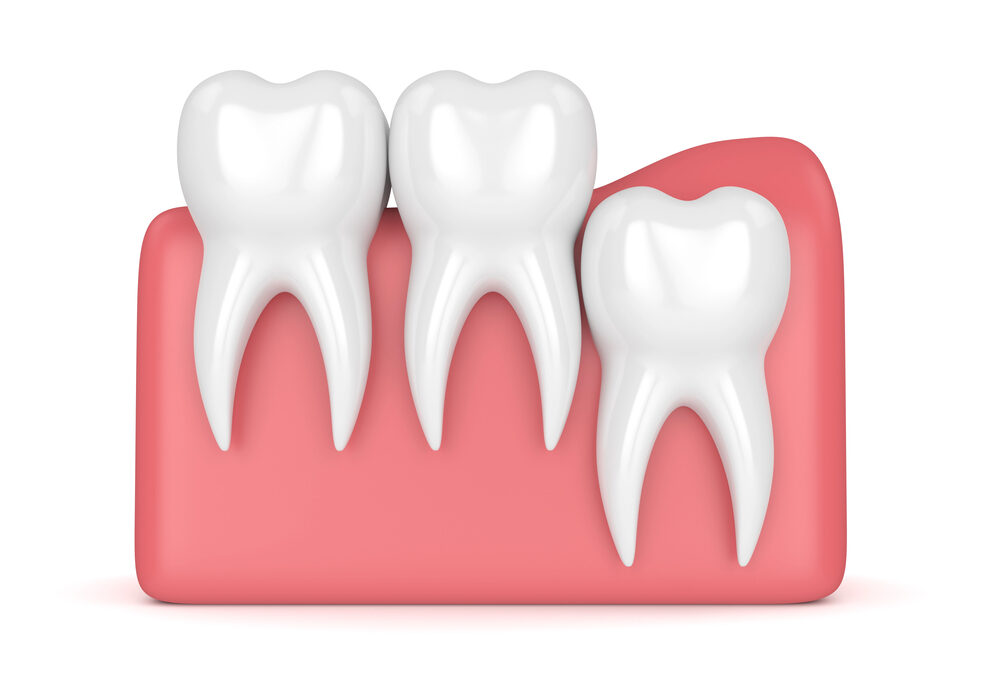
- Impacted, meaning they are trapped within the jaw
- Partly erupted, meaning they cannot completely emerge from the jaw
- Pericoronitis, meaning the flap of skin covering a partially erupted tooth becomes infected
- Crowding, meaning other teeth on the arch are shifting to allow space for the third molar
Remember, extraction of wisdom teeth may be possible at any age, but the best time for their extraction is in the late teens or early twenties period of life.
You may keep your wisdom teeth if:
- They are fully erupted and cause no pain or discomfort
- They aren’t prone to cavities
- The surrounding gums are healthy
- You either don’t have teeth shifting or don’t mind if your teeth shift and cause cosmetic issues with your smile, as long as your bite (occlusion) remains balanced
- You attend six-month checkups and cleanings, including x-rays, so we can monitor the health of your third molars
“Why are wisdom teeth called wisdom teeth, and what are they for?”
Now you know! If you have additional questions about wisdom teeth or would like to schedule a consultation with one of our dentists, give us a call at (630) 296-9176. After taking x-rays and examining your case, the dentist will provide an explanation of findings, along with treatment recommendations if applicable. Don’t let wisdom teeth pain keep you from your best life!