
With lifelong, good oral health practices and the care of a trusted Naperville, IL, dentist, you may be fortunate enough to retain your natural teeth throughout life. But the truth is, by age 50, Americans have lost an average of 12 teeth, including their wisdom teeth. Further, 1 in 10 adults aged 65 to 74 have lost all teeth, and that statistic increases to 1 in 5 for those over 75 years of age. Some teeth fall out due to gum disease and poor oral health, while others require removal, or tooth extraction, by a professional like Dr. Thomas F. Brown.
In today’s blog, you’ll learn when a tooth should be extracted and how we replace lost teeth with natural-looking, durable prosthetics. If you are concerned about potential tooth loss, damaged teeth, loose teeth, or how we replace lost teeth, we want to help. Schedule your consultation with Dr. Brown by calling us at (630) 296-9186, or schedule online now. You can also call us to ask questions before you make an appointment. We are always happy to help our patients, and we’re accepting new patients at this time.
What Is Tooth Extraction?
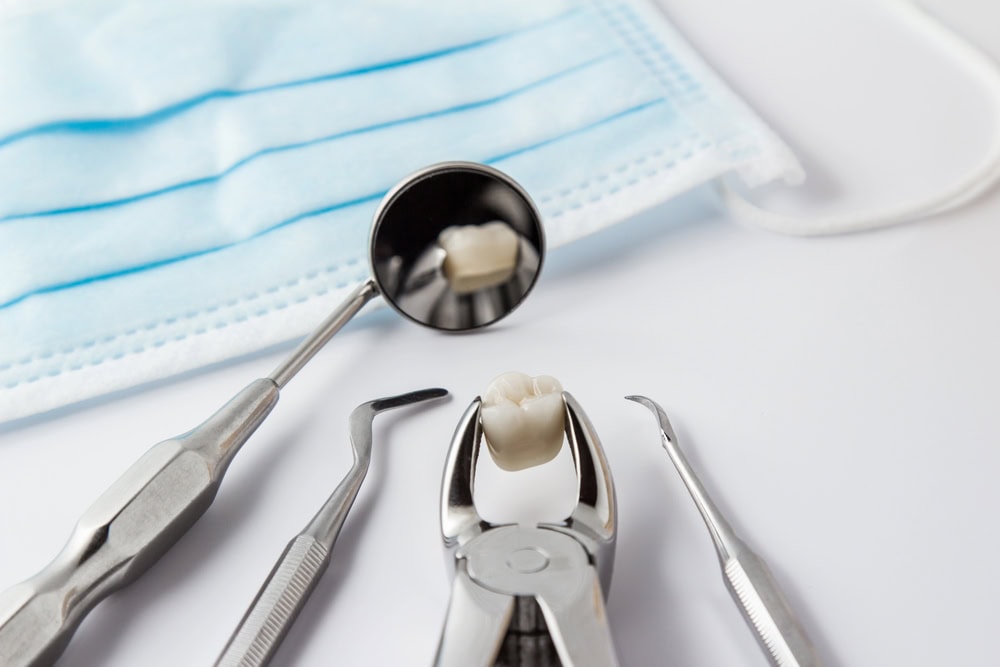
Tooth extraction is simply removing a tooth from its socket. We perform extractions in our office and offer various levels of sedation dentistry, as needed, for patient comfort. Sometimes removing a tooth is simple, but in other situations it requires surgery. Issues like large cavities, cracks, chips, infection, trauma, and gum disease (periodontitis) can lead to the need for extraction.
When Are Tooth Extractions Necessary?
Severe Tooth Decay
Small and moderate cavities can often be repaired with a dental filling or crown, but when tooth decay grows large, restorative procedures may not be sufficient to ensure oral health and comfortable function. In these situations, the dentist may recommend extraction.
Impacted/Troublesome Wisdom Teeth
The large third molars that erupt in the back of the mouth during a person’s late teens or early twenties are known as wisdom teeth. Humans no longer need wisdom teeth to pre-digest hard foods like roots and nuts because we eat a primarily soft diet. Over time and with evolution, the human mouth has become smaller and as a result, wisdom teeth can cause teeth to shift and crowd, even overlapping in some cases, as they vie for space to erupt. Wisdom teeth can also become impacted; this means they cannot erupt due to irregular positioning within the jaw. Dr. Brown and our team routinely perform wisdom teeth extractions.
Gum Disease
As the leading cause of adult tooth loss, gum disease afflicts about half of the population. Caught early, gum disease is treatable, but untreated the chronic condition leads to serious issues, like tooth loosening and loss, gum and bone necrosis (tissue death), as well as whole-health risks. Also called periodontitis, gum disease increases the risk for stroke, heart attack, dementia and Alzheimer’s disease, low-weight and pre-term births, diabetes complications, and more. When teeth become loose or at risk of falling out, Dr. Brown will recommend tooth extraction.
Preparation for Orthodontics or Dentures
In some cases, healthy teeth need to be extracted so that the patient can receive orthodontic treatment (like braces) or dentures.
What to Expect with Tooth Extractions & Patient Comfort
To determine whether tooth extraction is required, we’ll take X-rays and intra-oral photos of the affected teeth. Combining the findings of your oral exam and imaging, the dentist will determine whether you need one or more teeth removed. We’ll discuss anesthesia and sedation options before scheduling tooth extraction.
During your extraction, you’ll be kept comfortable and informed of what the dentist will do next as he performs the procedure. Your comfort and safety are our priority during extractions, and in all dental treatments.
Just following extraction, you’ll notice numbness and bleeding at the extraction site for a few hours. We will pack the socket with a cotton dressing to help control bleeding. You’ll be sent home with instructions regarding the dressing changes, when and how to resume oral homecare, and how to mediate issues like swelling and discomfort.
Tooth Extraction Healing Timelines:
Simple Extraction
- 24 to 48 hours for soreness and swelling to subside
- 3 to 5 days to feel “normal” and resume daily activities
- 7 to 10 days for gums to look and feel healthy
Surgical Extractions & Wisdom Teeth
- 3 to 5 days you’ll see noted improvement
- 1 to 2 weeks to feel “normal” and resume daily activities
- 3 to 4 weeks for gums to look and feel healthy
- Several months for the jawbone to completely heal (beneath the gums)
Restorative Prosthetics Replace Lost Teeth
Each patient is unique, so we offer a variety of prosthetics, also known as replacement teeth. Dental implants, dentures, and bridges replace lost teeth with natural-looking, durable, long-lasting prosthetics.
Schedule Your Tooth Extraction Consultation with Dr. Brown in Naperville, IL
Give us a call today at (630) 296-9186, or schedule your dental appointment online. The dentist will take time to talk with you about your concerns and expectations, then we’ll work with you to devise a treatment plan to restore your oral health, comfort, and beauty. We look forward to making you smile!